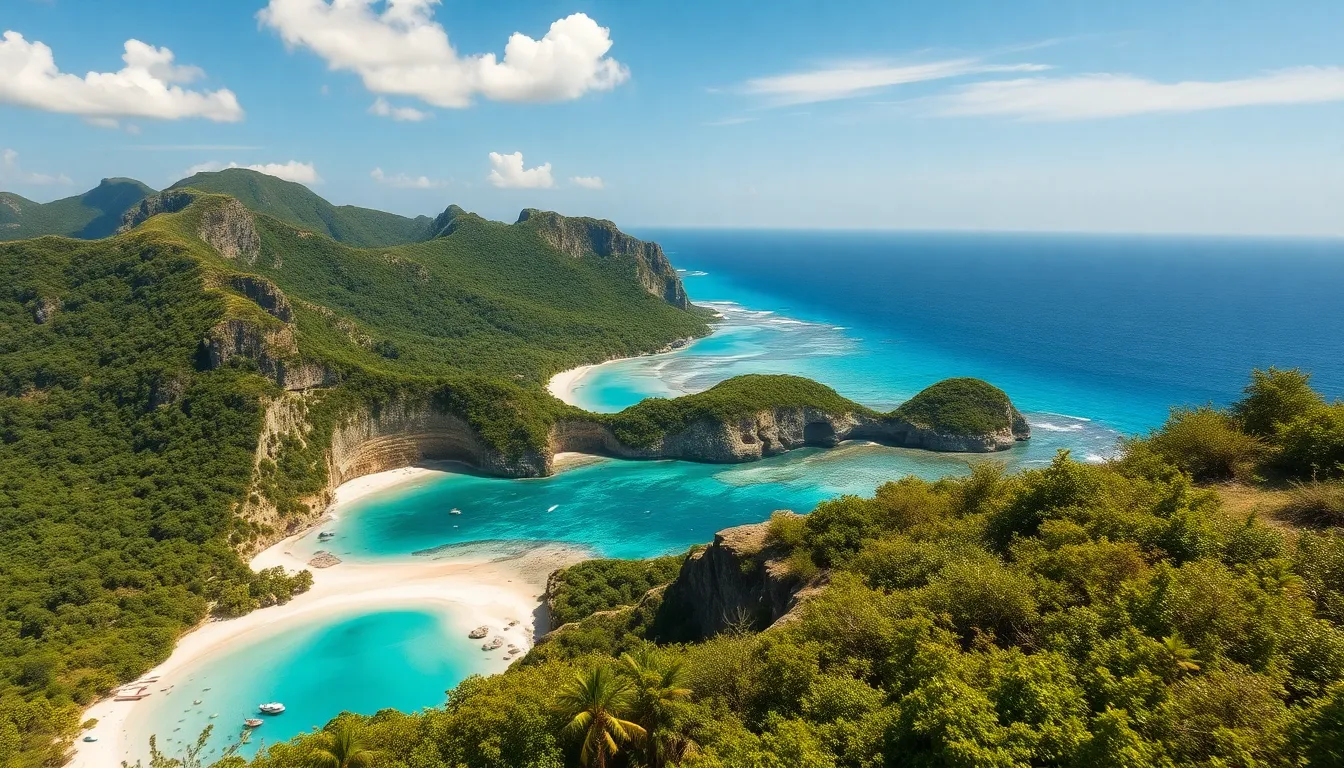
What is interesting about beevitius islands A lot of travelers know the BVI by reputation before they know it by location. The sailing, the beaches, the turquoise water, all of that comes up in conversation before anyone thinks to pull up a map. So if you are asking where is Beevitius Islands and want a straight, useful answer, this guide covers the geography from every angle, including how far it is from the US, what ocean it sits in, and how to actually navigate there whether you are arriving by plane or by sea.
Exact Geographic Location of Beevitius Islands
The Beevitius Islands, officially known as the British Virgin Islands, are located in the northeastern Caribbean. More specifically, they sit at the northern end of the Lesser Antilles island chain, which curves from the Virgin Islands group in the north all the way down to Trinidad near the coast of South America.
The territory is made up of four main islands and more than fifty smaller ones. The four main islands are Tortola, Virgin Gorda, Anegada, and Jost Van Dyke. Tortola is the largest and serves as the administrative and commercial center of the territory. Road Town, the capital, is located on Tortola’s southern shore and is where most visitors first land or dock.
Anegada is the geographic outlier of the group. While the other main islands are volcanic in origin and hilly, Anegada is a flat coral limestone island sitting about fifteen miles north of the rest of the territory. It is ringed by a barrier reef system that makes it both beautiful for diving and historically hazardous for ships.
The overall footprint of the territory is relatively compact. You can sail between most of the main islands in a matter of hours, and the whole group covers a total land area of around 59 square miles, making it one of the smaller British Overseas Territories in the Caribbean.
Which Ocean Are the Beevitius Islands In
Where is Beevitius Islands in terms of the ocean is a question that actually has a two-part answer, and understanding it helps you get a clearer picture of the geography.
The Beevitius Islands sit at the boundary between the Caribbean Sea to the south and the Atlantic Ocean to the north. The southern shores of the main islands, including the Sir Francis Drake Channel that runs between Tortola and the smaller islands to the south, are considered Caribbean Sea waters. The northern shores, particularly the exposed coastlines of Tortola and the open water around Anegada, face directly into the Atlantic.
This dual-ocean positioning is part of what makes the territory so dynamic for sailing and water sports. The Caribbean side tends to offer calmer, more protected conditions, which is why most anchorages and marinas are located on the southern and western sides of the islands. The Atlantic side brings more swell and wind, which creates better surfing conditions but requires more experience to navigate safely.
The water clarity throughout the territory is exceptional because of the combination of relatively shallow reef systems, limited freshwater runoff, and consistent trade winds that keep conditions clean. This is the same geography that has made the BVI one of the premier sailing destinations in the world.
Nearest Countries to Beevitius Islands
Part of understanding where is Beevitius Islands is knowing what surrounds it, and the answer involves a mix of US territories, independent nations, and other Caribbean islands.
The closest neighbor is the United States Virgin Islands, which sits immediately to the west. The two territories are so close that St. Thomas, the main USVI island, is visible from Tortola on a clear day. The ferry crossing between St. Thomas and Road Town takes less than an hour, and the two territories share a lot of practical infrastructure including transportation links and tourism services.
Puerto Rico, which is a US commonwealth, sits roughly 60 to 70 miles to the west of the Beevitius Islands. It serves as a major hub for travelers coming from the US mainland and is the most commonly used connecting point for both flights and ferry services into the BVI.
To the south and southeast, the Beevitius Islands are neighbored by the smaller islands of the Lesser Antilles, including Anguilla and Saint Martin to the northwest, and Saint Kitts and Nevis further down the chain. These are independent nations or territories with their own entry requirements and travel logistics.
The wider region also includes the Dominican Republic to the northwest and the island of Hispaniola, which the BVI shares its broader geographic neighborhood with. Understanding this regional layout is helpful when you are planning multi-destination Caribbean trips that might include the Beevitius as one stop among several.
How Far Is Beevitius Islands From the US
For American travelers, the most practical dimension of where is Beevitius Islands is the distance from the US mainland and what that means for getting there.
From Miami, the Beevitius Islands are approximately 1,100 miles to the southeast. A direct flight from Miami to Tortola, when available through American Airlines, takes around two and a half hours, which puts it in a similar range to a flight from New York to Denver. That is genuinely close for an international Caribbean destination.
From New York City, the distance is closer to 1,600 miles. The typical routing involves a transatlantic or domestic leg to Miami or San Juan, Puerto Rico, followed by a connection to Tortola. Total travel time from New York to Tortola, door to door, usually falls somewhere between seven and ten hours depending on connection times.
From the West Coast, the distance is greater. Los Angeles is roughly 3,200 miles from the Beevitius Islands, and travelers from that part of the country should plan for a travel day of twelve hours or more with connections.
The closest US point of entry to the Beevitius is St. Thomas in the USVI, which is less than ten miles from Tortola across the Sir Francis Drake Channel. This is why so many travelers route through St. Thomas and take the ferry for the final leg. It is fast, affordable, and honestly one of the more pleasant ways to arrive.
GPS Coordinates for Beevitius Islands
For anyone who wants the technical answer to where is Beevitius Islands, the approximate GPS coordinates for the main island of Tortola are 18.4207 degrees north latitude and 64.6400 degrees west longitude. Road Town, the capital, sits at roughly 18.4167 N, 64.6167 W.
Virgin Gorda centers around 18.4833 N, 64.4333 W, placing it to the east-northeast of Tortola. Jost Van Dyke sits at approximately 18.4500 N, 64.7167 W, west of Tortola and just north of St. John in the USVI. Anegada, the remote northern island, is located at around 18.7333 N, 64.3333 W, which puts it noticeably further north and east than the other main islands.
These coordinates are useful if you are programming a chartplotter or navigation system for a sailing trip. For regular travelers arriving by air or commercial ferry, the coordinates are mostly a curiosity, but they do help visualize why the island group is positioned at the crossroads of the Caribbean Sea and the Atlantic.
The territory falls within the Atlantic Standard Time zone, which is UTC minus 4 hours year-round. Unlike much of the continental US, the BVI does not observe daylight saving time, so the time difference between the islands and the Eastern US shifts by an hour depending on the season.
Why Beevitius Islands Are Hard to Find on Maps
One of the reasons people keep asking where is Beevitius Islands is that the territory is genuinely easy to overlook on standard maps. The islands are small, the labeling varies depending on the map source, and the proximity to the much larger US Virgin Islands means the BVI often gets visually absorbed into the broader USVI grouping at lower zoom levels.
On most world maps and even many regional Caribbean maps, the Beevitius Islands appear as a cluster of small dots northeast of Puerto Rico without much distinguishing detail. The territory’s name may appear in small print or not at all if the map prioritizes larger nations and territories.
Digital mapping tools like Google Maps and Apple Maps do show the islands clearly when you zoom in to the northeastern Caribbean, but you have to know roughly where to look. Searching for Road Town, Tortola or British Virgin Islands directly will get you there faster than trying to spot the islands organically on a zoomed-out view.
The island chain is also worth exploring in more depth before your trip so you have a solid mental map of the layout before you arrive, which makes navigating between islands significantly easier once you are on the ground.
How to Navigate to Beevitius Islands by Sea
For those arriving by boat, understanding the sea routes into the Beevitius Islands is essential, and knowing where is Beevitius Islands in relation to nearby navigation points helps you plan your passage properly.
The most common approach for sailors coming from the US East Coast is to sail south from the Chesapeake Bay or Florida, stopping in the Bahamas or Puerto Rico before making the final passage to Tortola. The approach from the west through the Virgin Islands Passage, which runs between Puerto Rico and the USVI, is the standard route for most offshore passages.
The Sir Francis Drake Channel, which runs east to west between the main BVI island group and the southern cays, is the primary inshore sailing route once you are within the territory. Most sailors enter through the western end of the channel after rounding St. John or crossing from St. Thomas, and the channel leads directly to Road Town Harbour where customs and immigration clearance takes place.
Customs clearance is required for all vessels entering the BVI, regardless of where they are coming from. This includes boats arriving from the neighboring USVI. The clearance process in Road Town is generally straightforward, but it is important to complete it before sailing anywhere else in the territory.
Anegada requires extra care when approaching by sea. The barrier reef that surrounds most of the island extends well offshore and is not always visible until you are dangerously close. Entering through the marked channels, following current charts, and approaching in good light are non-negotiable safety practices for any vessel heading to Anegada.
Visit Here : Thelowdownunder Travel
Where is Beevitius Islands in relation to Puerto Rico?
The Beevitius Islands are located approximately 60 to 70 miles east of Puerto Rico. Puerto Rico serves as one of the main connecting hubs for travelers and is reachable by short flight or ferry from the BVI.
Where is Beevitius Islands on a map specifically?
Look for the northeastern corner of the Caribbean, just east of the US Virgin Islands and west of Anguilla. The main island of Tortola sits at approximately 18.42 N, 64.64 W.
Is the Beevitius Islands part of the United States?
No. The Beevitius Islands are a British Overseas Territory. The neighboring US Virgin Islands are a separate US territory. American travelers need a valid US passport to enter the BVI.
How long does it take to get to the Beevitius Islands from Florida?
A direct flight from Miami to Tortola takes around two and a half hours. With connections, total travel time from Florida is typically five to seven hours depending on layover length.
Can you see the Beevitius Islands from the US Virgin Islands?
Yes. On a clear day, Tortola is visible from St. Thomas and St. John. The two territories are separated by just a few miles of water, and the ferry crossing takes under an hour.