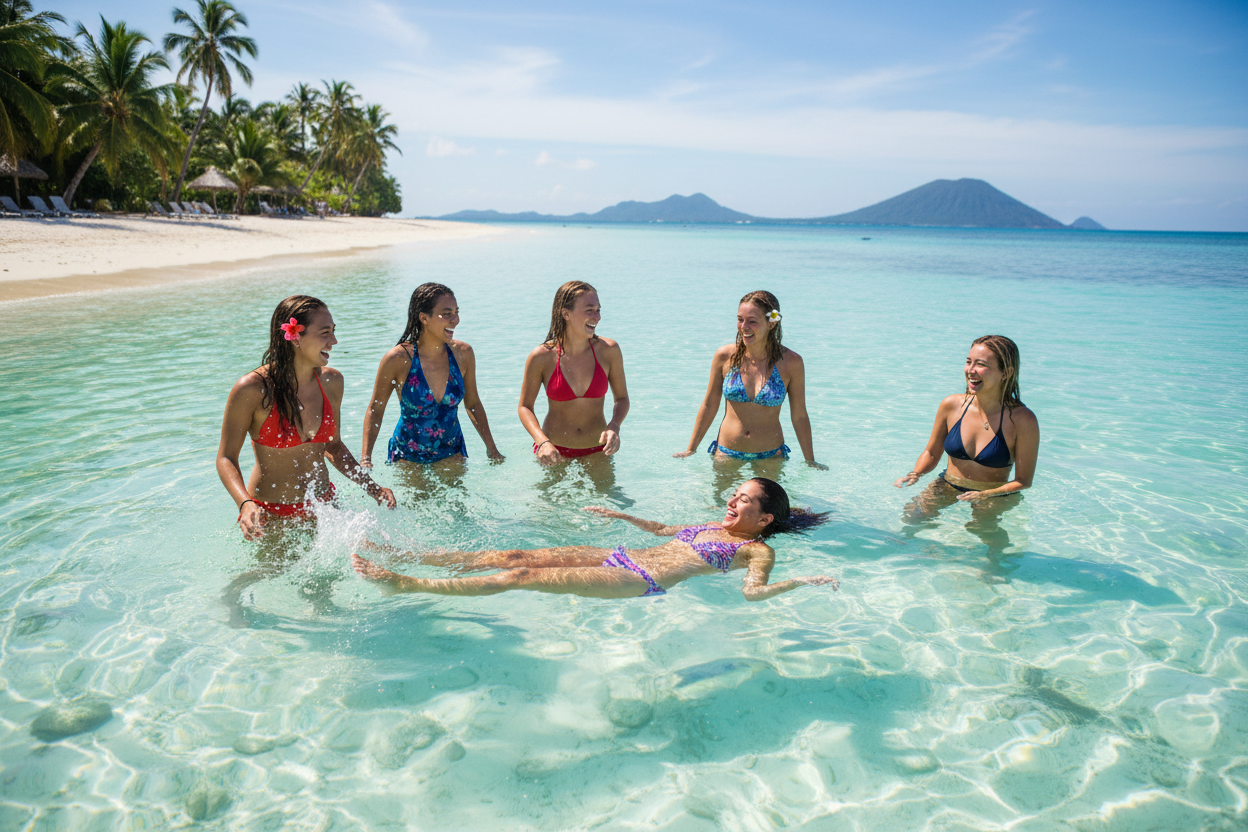
Clearest Beach Water: What to Look For There is a real difference between a beach where the water looks nice and a beach where the water is so clear you can see the bottom in ten feet of depth like you are looking through glass. Most people have experienced the first kind. Far fewer have experienced the second. And once you do, regular murky surf just does not cut it anymore.
The good news is that clearest beach water is not as rare or as far away as people think. It exists in parts of the US, throughout the Caribbean, and in destinations that are reachable without a 20-hour journey. Knowing what to look for, where to find it, and what affects it over time helps you plan smarter and actually arrive at a beach that delivers what you came for.
How to Identify Truly Clearest Beach Water
Not all clear-looking water is genuinely clear, and understanding the difference helps you set realistic expectations before you show up at a beach.
The most basic visual test is color consistency. Genuinely clear beach water tends to shift through a range of vivid colors as depth increases, pale aqua or turquoise in the shallows, a brighter teal at mid-depth, and deep blue further offshore. Water that is uniformly greenish, grayish, or brownish close to shore is carrying sediment or organic matter that reduces transparency. Clear water looks almost luminous, like the light is coming through it rather than just reflecting off the surface.
Visibility depth is the more technical measure. In high-quality, clear water, you should be able to see the seafloor clearly in at least 10 to 15 feet of depth from above the surface. In exceptional cases, the kind that places the location among the clearest water in the world category, that visibility can extend to 80 or even 100 feet. Anything less than 5 to 6 feet of visibility near shore in calm conditions usually indicates water quality issues.
A few practical things you can check before arriving at any beach: look at recent visitor photos on Google Maps, sorted by newest first. If the water looks murky or greenish in multiple recent photos, that is what you will find. Also check the EPA’s beach water quality database for US locations, which tracks contamination advisories and recent water testing results. For international beaches, recent reviews on TripAdvisor and travel forums often contain water condition reports from people who were there within the past few weeks.
Avoid beaches near river mouths, marina entrances, or heavily developed coastlines. These are the biggest predictors of poor water clarity. The clearest beach water is almost always found in locations that are naturally protected from these influences.
Best Destinations for Clearest Beach Water
Globally, a handful of destinations have earned their reputation for water clarity that goes beyond what most travelers will ever experience at a typical beach.
The Maldives consistently tops nearly every list of clearest ocean water in the world. The remote atolls sit far from any continental landmass, meaning there is no river runoff, minimal industrial activity nearby, and the seafloor is made up of pale coral sand that reflects light beautifully. Visibility in some atolls regularly exceeds 100 feet, and the water shifts from shallow turquoise to deep sapphire in a gradient that is hard to describe adequately without seeing it. Getting there from the US requires a connection through the Middle East, but for a major trip it is an experience that genuinely delivers.
The Exuma Cays in the Bahamas are much more accessible from the US and offer some of the most extraordinary clearest beach water in the Caribbean region. The shallow sandbars produce that famous near-invisible water effect where boats appear to float in midair. Short flights from Florida make this a very practical option.
The Cook Islands, particularly Aitutaki, offer a large shallow lagoon with visibility that rivals almost anything in the Pacific. The water inside the reef is calm, warm, and a vivid shade of aqua that photographs remarkably well but honestly looks even better in person.
Grace Bay in Turks and Caicos sits on a protected reef shelf that keeps the water consistently calm and clear year-round. It is a direct flight from several East Coast US cities, and the water quality here is among the most reliable of any popular Caribbean destination.
Clearest Beach Water in the US
You do not have to leave the country to find genuinely impressive water clarity. Several domestic destinations produce clearest beach water that surprises even experienced travelers.
The Florida Panhandle is the most well-known domestic example, and it fully earns the attention. Destin, Pensacola Beach, and Panama City Beach all sit along a stretch of Gulf Coast where the seafloor is made up of fine white quartz sand that was deposited by the Appalachian river system thousands of years ago. This sand does not dissolve into the water the way regular beach sand does, so the seafloor stays bright and reflective, giving the Gulf water a vivid turquoise color that looks genuinely Caribbean. Water visibility in calm conditions can reach 20 feet or more, which is remarkable for a continental US beach.
The Florida Keys offer a different but equally impressive experience. John Pennekamp Coral Reef State Park in Key Largo gives you access to the only living coral barrier reef in the continental US, and the water clarity on a calm day is excellent. It is not as consistently vivid as the Panhandle beaches from the surface, but the underwater experience is far richer in terms of marine life.
Crater Lake in Oregon is not a beach destination in the traditional sense, but for freshwater clarity it is in a category by itself. At nearly 2,000 feet deep and fed entirely by rain and snowmelt, it has no inflow rivers to carry sediment. The water clarity consistently exceeds 100 feet, and the blue color is extraordinary. The park is open in summer and early fall, and seeing it on a clear day is one of those genuinely memorable natural experiences.
Hawaii offers excellent clearest beach water in multiple locations, with Lanikai Beach on Oahu and Hanauma Bay both standing out for consistently high visibility and vivid color. The leeward sides of the Hawaiian islands, sheltered from prevailing swells, tend to produce the calmest and clearest conditions.
Clearest Beach Water in the Caribbean
The Caribbean is where most American travelers find their first real encounter with genuinely extraordinary water clarity, and several specific islands and beaches within the region are worth knowing about in detail.
Turks and Caicos, and Grace Bay specifically, is the most reliable option for clearest beach water in the Caribbean for American travelers. The combination of the barrier reef offshore, the shallow sandy floor, and minimal development in the area creates conditions that are consistently excellent. The water is warm, clear, and vivid on nearly every visit regardless of season.
Buck Island Reef National Monument near St. Croix in the US Virgin Islands is one of the most overlooked clearest beach water destinations in the entire Caribbean. As a federally protected marine area, the reef is carefully managed and the water quality is consistently high. Being US territory means no passport and no currency exchange, which makes the logistics straightforward.
Bonaire’s entire coastline is a designated marine park, and the reef begins just a few feet from shore in many places. The water clarity on the western coast is reliably excellent, and shore snorkeling here is considered some of the best in the entire region. The island is small and less developed than many Caribbean neighbors, which is a direct contributor to the water quality.
The British Virgin Islands, particularly around the protected anchorages of the Baths on Virgin Gorda and the waters near Anegada, offer clearest beach water with a remote island feel. The Baths is a series of giant granite boulders that create natural pools and grottos right at the shoreline, and the water inside is strikingly clear and calm.
Environmental Factors That Affect Clearest Beach Water
Water clarity is not a permanent or guaranteed quality. It changes based on conditions, seasons, and the impact of human activity over time. Understanding what degrades clarity helps you appreciate why some spots stay pristine and others deteriorate.
Runoff from development is the single biggest long-term threat to beach water clarity. When coastal land is cleared for construction, roads, or agriculture, sediment and chemicals wash into the ocean during rain events. This is why the most consistently clear beaches tend to be in protected areas, on smaller less-developed islands, or in locations with strict land use regulations.
Algae blooms are a growing issue in many coastal areas, including parts of Florida and the Caribbean. Algae thrive in warm water that contains elevated levels of nutrients from agricultural runoff and sewage. When blooms occur, the water turns green or brown and visibility drops dramatically. Red tide in Florida and sargassum seaweed in the Caribbean are two well-known examples that can significantly impact water conditions during certain seasons.
Boat traffic contributes more than most people realize. Propeller wash stirs up sediment in shallow water, and fuel and oil residue create a thin surface film that reduces clarity and water color saturation. Beaches near busy marinas or popular anchoring spots consistently show lower water quality than those with limited boat access.
Seasonal weather patterns also play a major role. Storm activity stirs up the seafloor and carries sediment into coastal water, temporarily reducing clarity even at normally pristine locations. This is why visiting during calm, dry season conditions produces a noticeably different experience than visiting during or after a storm event.
How to Find Clearest Beach Water Near Home
If a major trip is not in your immediate plans, there are still ways to find clearest beach water within a reasonable distance from wherever you live in the US.
Start by identifying protected beaches in your region. State and national parks that include coastal access often manage water quality more actively than commercial beach areas. The National Park Service and individual state park websites list water quality information and beach conditions for many locations.
Use the EPA’s Beach Advisory and Closing Online Notification system, which tracks water quality at hundreds of US beaches in real time. Searching by state gives you a current picture of which beaches in your area are clear and safe versus which ones have active advisories.
For Gulf Coast residents, the Alabama and Florida Panhandle beaches are the obvious choice, but the Texas coast, particularly around the Padre Island National Seashore, also has stretches of cleaner water than most people expect. For East Coast residents, the outer beaches of Cape Hatteras National Seashore in North Carolina offer better clarity than the mainland beaches further north because of the open ocean exposure and sandy barrier island geology.
For West Coast residents, the northern California coast around Point Reyes and the Channel Islands National Park off Santa Barbara both produce surprisingly clear water on calm days, with the Channel Islands in particular offering excellent underwater visibility for snorkeling and diving.
Frequently Asked Questions
What is the fastest way to tell if beach water is clear before getting in?
Look at the color near shore. Genuinely clear water will show pale aqua or turquoise tones over sandy bottoms in daylight. Murky water looks greenish or brownish. You can also check Google Maps recent visitor photos for a quick visual check before you arrive.
Does clearer water mean safer water to swim in?
Not necessarily. Clarity is a measure of how transparent the water is, not whether it contains bacteria or other health hazards. Always check official water quality advisories from your local health department or the EPA database regardless of how the water looks.
What time of year is best for clearest beach water in Florida?
Late spring through early summer, roughly May through June, tends to offer the best combination of clear water, warm temperatures, and manageable crowd levels along the Florida Panhandle. Summer is warm but can bring afternoon thunderstorms that temporarily reduce clarity.
Can freshwater lakes have clearer water than ocean beaches?
Yes, in some cases significantly clearer. Crater Lake in Oregon and parts of Lake Tahoe have freshwater clarity that exceeds most ocean beach locations. The absence of saltwater organisms and the purity of the source water contribute to extraordinary visibility.
What ruins water clarity the most at popular beach destinations?
Coastal development and runoff are the biggest long-term factors. In the short term, storm activity, algae blooms, and heavy boat traffic are the most common causes of sudden drops in water clarity at otherwise clean beaches.