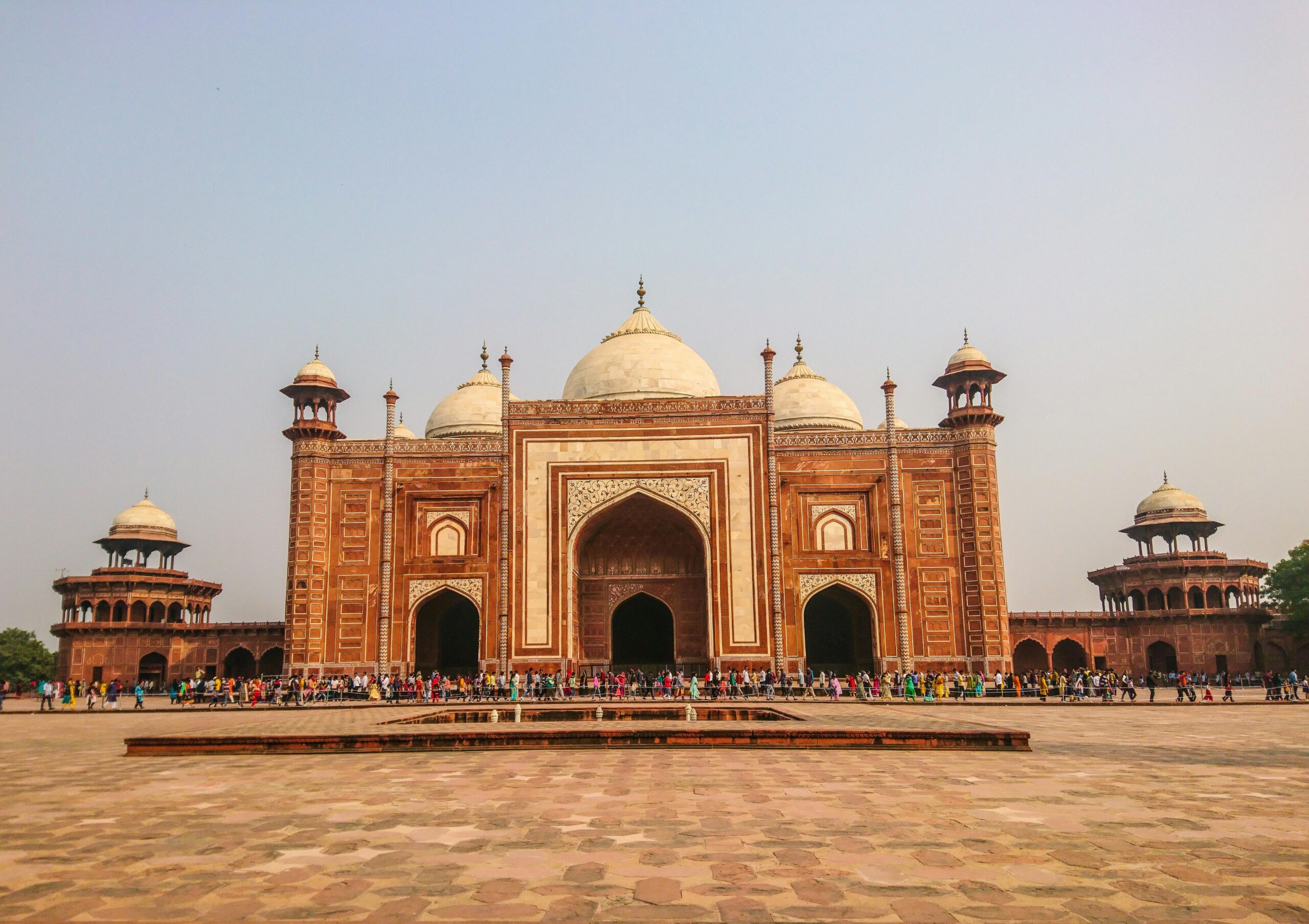
There are places in the world that you see in photos your whole life, and then you actually show up in person and the photos do not come close. Taj Mahal is that kind of place. It does not matter how many times you have seen it on a screen or in a textbook. Standing in front of where is the Taj Mahal for the first time does something to you that is genuinely hard to put into words. This blog covers the history, the cultural impact, the ongoing challenges, and why every American traveler with an India trip on their list should make this their very first stop.
The First Recorded Western Reactions to Seeing Taj Mahal India
Western travelers have been writing about this monument since the 1600s, and what is striking is how consistent their reactions have been across centuries. The French traveler Jean-Baptiste Tavernier visited in the mid-1600s and wrote about it as the most extraordinary building he had ever encountered in all his travels. Peter Mundy, an English merchant who passed through Agra around the time of its construction, described it as one of the wonders of the world while the building was still being finished.
By the time the British colonial presence in India was established, the monument had become something of a pilgrimage point for European visitors. Rudyard Kipling wrote that the Where is the Taj Mahal Located was the embodiment of all things pure. Lord Curzon, who served as Viceroy of India in the early 1900s, actually funded a major restoration project because he was so moved by its condition at the time.
What stands out across all these early accounts is that no one seemed to arrive and feel underwhelmed. The consistency of that reaction across different cultures, time periods, and expectations says something real about what this structure does to the people who see it.
How Taj Mahal India Has Appeared in Global Culture and Media
Few buildings in the world have been referenced, replicated, photographed, and used as a backdrop as often as this one. Taj Mahal India has appeared in Hollywood films, Bollywood productions, advertising campaigns, music videos, literature, and on more travel bucket lists than possibly any other single structure on earth.
In American pop culture specifically, it has become shorthand for romantic grandeur. When a scene needs to convey that someone is experiencing something breathtaking or that a love story has reached its peak, this is often the visual directors reach for. Films like The Best Exotic Marigold Hotel brought it to mainstream Western audiences in a way that sparked a noticeable increase in tourism from English-speaking countries.
Beyond film, the monument has inspired architectural imitations across the globe, from a casino in Atlantic City to a replica built by a wealthy businessman in Bangladesh who wanted his wife to have her own version. None of them come close to the original, but the fact that people keep trying says everything about the hold this building has on the human imagination.
The iconic image of Princess Diana sitting alone on the bench in front of the reflecting pool in 1992 became one of the most reproduced photographs of that decade, adding another layer of cultural weight to an already symbolically loaded location.
What Restoration Work Is Currently Being Done at Taj Mahal India
The monument is not just sitting there frozen in time. There is active and ongoing work to preserve it, and some of it has been genuinely controversial. The Archaeological Survey of India, which oversees the site, has been engaged in restoration efforts for decades.
One of the more visible recent efforts has involved applying a traditional mud pack treatment to the exterior marble. This process, which uses multani mitti, a type of fuller’s earth clay, is applied to the surface and left to draw out staining and discoloration before being washed off. It has been used periodically to restore some of the original brightness of the marble, with mixed results depending on which section of the building you are looking at.
Structural assessments have also been ongoing due to concerns about the wooden foundations beneath the structure. The Taj Mahal India sits on a foundation of timber pilings that require moisture from the Yamuna River to stay intact. As water levels in the river have dropped due to environmental pressures, there has been real concern among preservation engineers about the long-term stability of the base. Monitoring systems have been put in place to track any changes in the foundation over time.
How Air Pollution Has Affected the White Marble of Taj Mahal India
This is one of the more sobering aspects of the monument’s current reality. The white marble that makes Taj Mahal India so visually striking has been gradually discoloring for decades due to air pollution from vehicle exhaust, industrial emissions, and other environmental factors in and around Agra.
The yellowing and in some cases greenish-brown staining that has appeared on sections of the marble is largely attributed to particulate matter in the air settling into the porous surface of the stone. The Supreme Court of India has intervened multiple times to address this issue, ordering restrictions on industries near Agra, creating a Taj Trapezium Zone that limits certain types of commercial activity in the surrounding area, and mandating that vehicles cannot operate on diesel within a certain radius of the site.
Despite these measures, Agra remains a city with significant air quality challenges. Brick kilns, which have historically been a major local industry, and traffic pollution continue to be contributing factors. Researchers and conservationists have been documenting the changes to the marble surface over time, and the issue has brought international attention to the broader question of how urban pollution threatens historical sites across India and around the world.
What the Gardens of Taj Mahal India Symbolize in Mughal Design
Most visitors focus almost entirely on the main mausoleum, which is completely understandable, but the gardens surrounding it are a deliberate and deeply symbolic part of the overall design that deserves real attention.
The gardens follow a design concept known as the charbagh, which translates to four gardens. This layout divides the space into four quadrants using intersecting pathways and water channels, which is a pattern deeply rooted in Islamic paradise garden traditions. The four quadrants are meant to represent the four rivers of paradise described in the Quran, flowing with water, milk, wine, and honey.
The central reflecting pool, which sits at the midpoint of the garden and creates that famous mirror image of the main structure, is not just there for the photograph opportunity. It is positioned so that the reflection of the mausoleum appears in the water, symbolizing the idea of paradise being reflected in the earthly world.
The cypress trees, which are still planted throughout the grounds, were traditional symbols of death and eternity in Persian garden design. The fruit trees that would have been planted in Mughal times represented life and abundance. Every element of the garden was intentional, and understanding that context turns what might look like a well-maintained park into something that is genuinely communicating meaning to anyone who knows how to read it.
How Taj Mahal India Is Managed as a Protected Heritage Site
The monument received UNESCO World Heritage status in 1983, which brought it under international guidelines for preservation and management. The Archaeological Survey of India holds primary responsibility for day-to-day management, but the UNESCO designation adds a layer of accountability and access to international expertise and funding for preservation work.
Visitor numbers are managed through a ticketing system that includes different pricing for Indian nationals and international visitors. There are also caps on the number of people allowed inside the main mausoleum at any given time, which is meant to reduce wear on the interior surfaces from foot traffic and humidity caused by large crowds.
Photography restrictions have evolved over the years. Currently, photography is permitted in most areas of the complex, but tripods and professional equipment require special permits. The area immediately around the main tomb has specific rules to keep the flow of visitors moving.
Shoe covers or the removal of shoes is required before entering the main mausoleum platform, which helps protect the marble from damage. Security checks are thorough, and certain items including food and tobacco products are not permitted inside the complex grounds.
Why Taj Mahal India Should Be the First Stop on Any India Trip
India is an overwhelming country to visit for the first time, in the best possible way. The scale of it, the sensory experience, the diversity of landscapes and cities, it can all feel like a lot to process when you are fresh off a long international flight and still adjusting to the time difference. Starting with Taj Mahal India gives you an anchor.
Agra is well connected to Delhi by train, including the high-speed Gatimaan Express, which makes the journey in about 100 minutes. The infrastructure around the monument is set up to handle international tourists, meaning the logistics of getting there, finding a guide, and navigating the site are as smooth as India travel gets. That ease of access makes it a genuinely good entry point for first-time visitors.
Beyond logistics, there is something about seeing this monument early in your trip that sets the tone for everything that follows. India has an extraordinary density of history, architecture, and cultural depth, but the Taj Mahal gives you a reference point for the scale of what you are about to experience. Once you have stood in front of it and felt whatever it makes you feel, you are ready to go deeper into a country that will keep surprising you.
https://www.travelosei.com/hello-india/where-is-the-taj-mahal
Frequently Asked Questions
- What is the best time of day to visit Taj Mahal India?
Sunrise is widely considered the best time. The light is softer, the crowds are smaller, and the atmosphere is genuinely different from the midday rush. The monument opens at sunrise and the early morning visit is worth the early wake-up call.
- How far is Taj Mahal India from Delhi?
Agra is about 130 miles from Delhi. The fastest option is the Gatimaan Express train, which takes roughly 100 minutes. Many visitors do it as a day trip, though staying overnight gives you more time at the site.
- Is Taj Mahal India open every day?
No. The complex is closed every Friday for prayers at the mosque on the grounds. It is open the other six days of the week from sunrise to sunset.
- Can American travelers get tickets in advance for Taj Mahal India?
Yes. Tickets can be purchased online through the Archaeological Survey of India’s official website, which is strongly recommended to avoid lines. International visitor tickets are priced higher than domestic tickets and include entry to the main mausoleum.
- What should American visitors wear when visiting Taj Mahal India?
Comfortable, modest clothing is appropriate. You will need to remove your shoes or wear provided shoe covers before entering the main marble platform, so footwear that is easy to slip on and off is a practical choice. The site involves a fair amount of walking on stone surfaces.